
How to Jump Start a Car Safely: A Complete Step-by-Step Guide
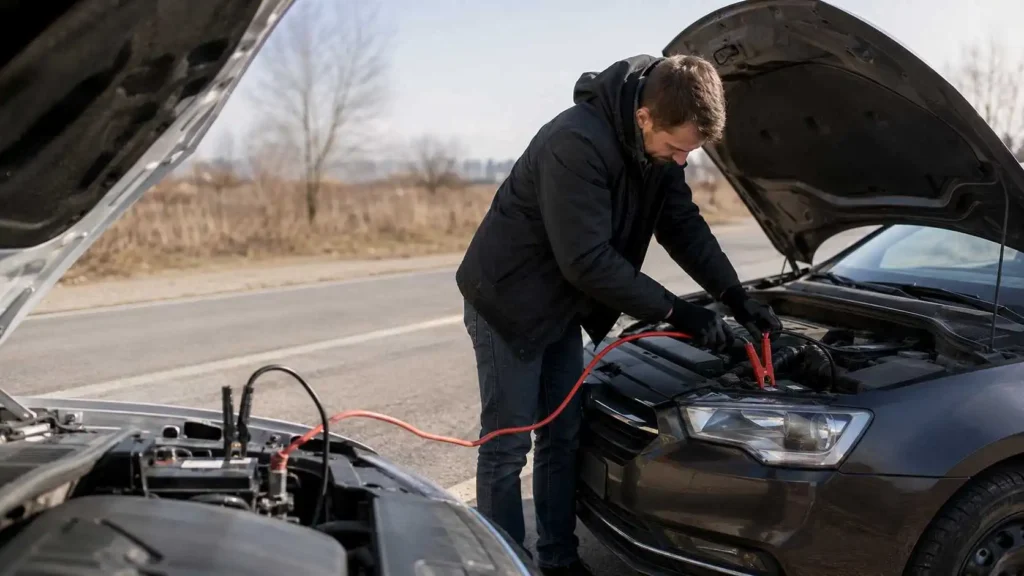
A dead car battery can happen at the worst possible time. You may be heading to work, leaving a shopping centre, or getting ready for a road trip when your car suddenly refuses to start. In many cases, the problem is not serious. The battery may simply be flat, and a jump start can help get the vehicle running again.
Knowing how to jump start a car is a useful skill for every driver. It can save time, reduce stress, and help you before vehicle towing or roadside assistance. However, it is important to do it correctly because connecting jumper cables the wrong way can damage your car’s electrical system or even cause injury.
This guide explains everything you need to know, including the tools required, safety checks, step-by-step instructions, and what to do after your car starts.
What Does It Mean to Jump Start a Car?
Before learning the steps, it is helpful to understand what jump starting actually does. A jump start uses power from another vehicle’s battery or a portable jump starter to give your flat battery enough charge to start the engine.
Once the engine starts, the alternator begins charging the battery again while the vehicle is running. This does not always mean the battery is fixed. If your battery is old, damaged, or not holding charge, the car may fail to start again later.
Jump starting is usually a temporary solution. It helps you get moving, but you should still check why the battery went flat in the first place.
Common Reasons Your Car Battery Goes Flat
- Leaving the headlights, interior lights, or radio on while the engine is off.
- Cold weather reducing battery performance, especially with older batteries.
- Frequent short trips that don’t allow the alternator to fully recharge the battery.
- Corroded battery terminals affecting the electrical connection.
- A faulty alternator that is unable to recharge the battery properly.
- Loose or damaged battery connections.
- An old battery that has reached the end of its lifespan.
- Lack of regular battery maintenance or inspection.
Tools You Need Before You Start
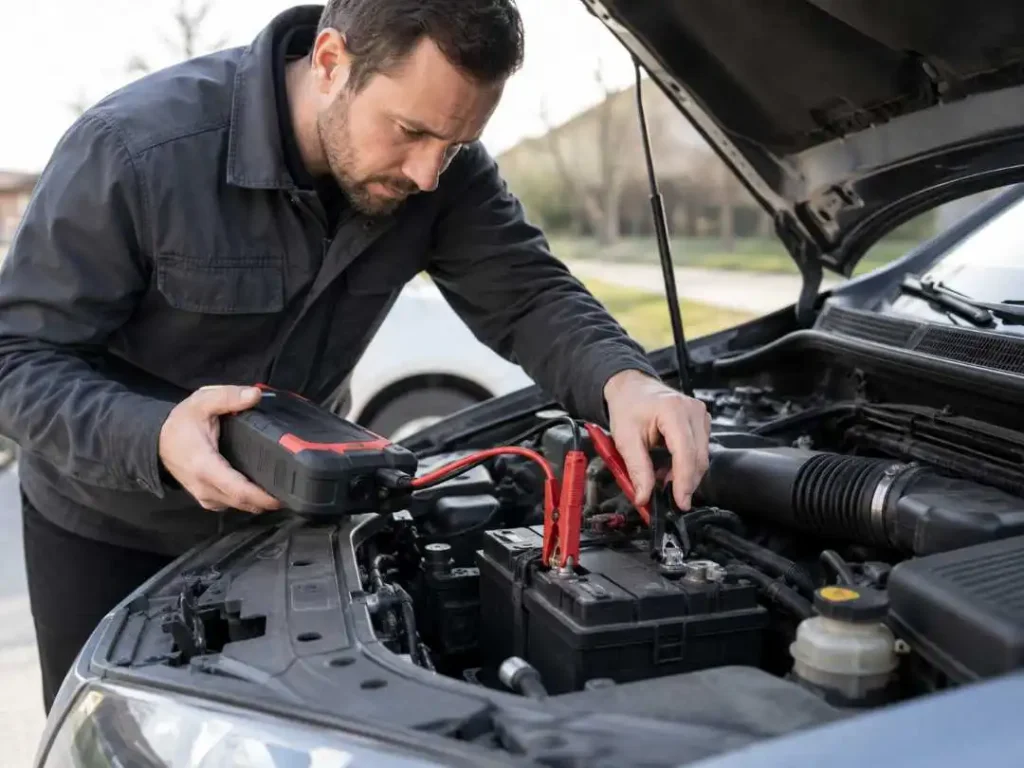
To safely jump start a car, you need the right equipment. The most common option is a set of jumper cables and another vehicle with a working battery. You can also use a portable jump starter, which is especially useful if no other car is available.
Make sure the jumper cables are in good condition. The clamps should be clean, strong, and free from damage. Poor-quality or damaged cables may not transfer power properly and can create safety risks.
You should also wear gloves if available and avoid touching metal parts while the cables are connected. If your battery is cracked, leaking, swollen, or smells like rotten eggs, do not attempt to jump start the vehicle. In that case, call a professional.
How to Jump Start a Car Using Jumper Cables
Learning how to jump start a car with jumper cables is simple, but the order of connection matters. Following the correct process helps protect both vehicles and reduces the risk of sparks.
Step 1: Park Both Vehicles Safely
Park the working vehicle close enough for the jumper cables to reach both batteries, ensuring the vehicles do not touch. Turn off both engines, remove the keys, and switch off all electrical accessories such as headlights, air conditioning, and the radio.
Step 2: Locate the Battery Terminals
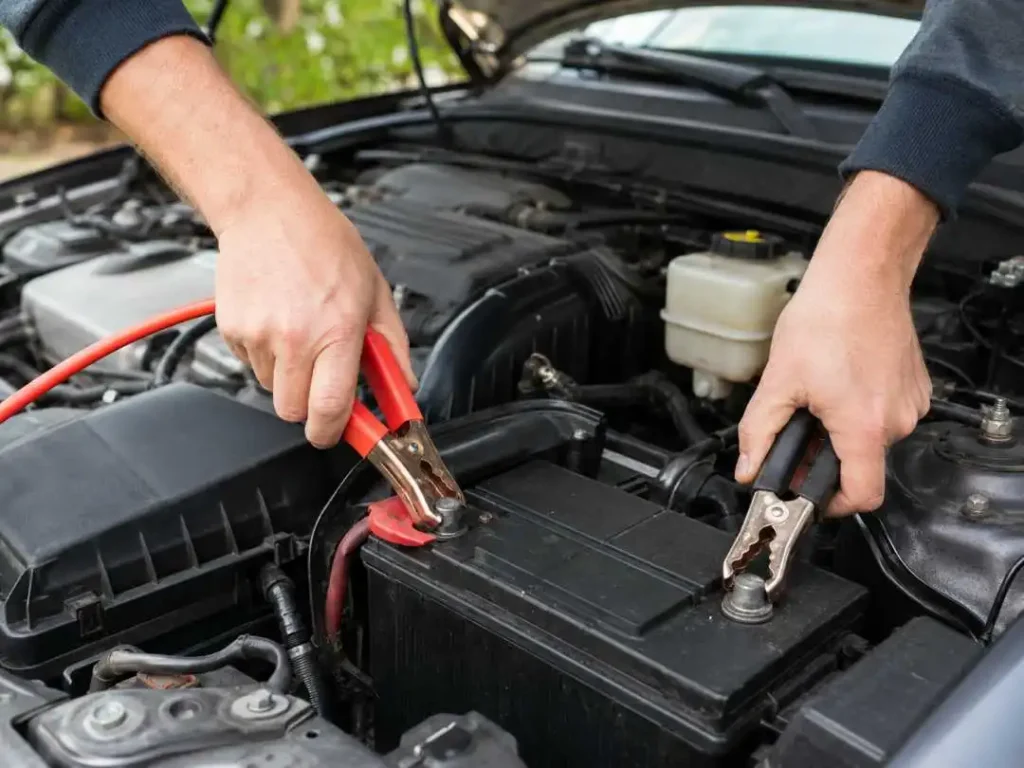
Open both bonnets and locate the batteries. Identify the positive (+) and negative (–) terminals. The positive terminal is usually marked with a plus sign and often has a red cover, while the negative terminal is marked with a minus sign and is typically black.
Step 3: Connect Red Clamp to Flat Battery
Attach one red (positive) jumper cable clamp to the positive (+) terminal of the flat battery.
Step 4: Connect Red Clamp to Working Battery
Attach the other red (positive) clamp to the positive (+) terminal of the working battery.
Step 5: Connect Black Clamp to Working Battery
Attach one black (negative) jumper cable clamp to the negative (–) terminal of the working battery.
Step 6: Connect Black Clamp to a Metal Ground Point
Attach the remaining black (negative) clamp to an unpainted metal surface on the vehicle with the flat battery, such as a clean bolt or metal bracket away from the battery. This helps reduce the risk of sparks.
Step 7: Start Both Vehicles
Start the working vehicle and let it run for a few minutes. Then try starting the vehicle with the flat battery. If it starts successfully, allow both vehicles to run for a few more minutes before disconnecting the jumper cables.
How to Remove Jumper Cables Safely
Removing the cables in the correct order is just as important as connecting them properly. If you remove them carelessly, you could create sparks or damage electrical components.
Step 1:
Remove the black clamp attached to the unpainted metal surface (ground) on the vehicle that had the flat battery.
Step 2:
Disconnect the black clamp from the negative (-) terminal of the vehicle providing the jump start.
Step 3:
Remove the red clamp from the positive (+) terminal of the working battery.
Step 4:
Finally, remove the red clamp from the positive (+) terminal of the battery that was flat.
Step 5:
Keep the clamps from touching each other or any metal surfaces. Coil the cables neatly and store them.
Step 6:
Keep the jump-started vehicle running for 20–30 minutes. Driving the vehicle is better than idling because the alternator charges the battery more effectively.
How to Jump Start a Car With a Portable Jump Starter
A portable jump starter is a convenient tool, especially if you drive alone or travel in areas where help may not be nearby. It works like a small power bank for your car battery.
To use it, make sure the jump starter is charged. Turn off your vehicle and all electrical accessories. Connect the red clamp to the positive terminal of the flat battery. Then connect the black clamp to a suitable metal ground point or the negative terminal, depending on the jump starter instructions.
Turn on the jump starter and try to start the car. Once the engine starts, turn off the jump starter and remove the clamps, starting with the black clamp first and then the red clamp.
Always read the manufacturer’s instructions because different jump starter models may have slightly different steps. If you often face battery issues, keeping a portable jump starter in your car can be a smart investment.
Important Safety Tips Before Jump Starting.
- Avoid smoking, open flames, or sparks near car batteries (they can release flammable gases).
- Never jump start a frozen battery — it can crack or explode.
- Inspect both batteries for leaks, cracks, corrosion, or loose terminals before connecting cables.
- Clean minor corrosion carefully, but leave severely damaged batteries to a professional mechanic.
- Ensure both vehicles have the same voltage system (typically 12V for most cars).
Common Mistakes to Avoid
Many drivers know the basics of how to jump start a car, but small mistakes can cause problems. One of the most common errors is connecting the cables in the wrong order. Reversing the polarity can damage sensitive electronics and may cause sparks.
Another mistake is connecting the final black clamp directly to the negative terminal of the flat battery. While some people do this, using a metal ground point away from the battery is generally safer.
Do not allow the jumper cable clamps to touch each other while connected. This can cause a short circuit. Also, do not keep trying to start the car repeatedly if it does not turn over after a few attempts. Long repeated attempts can overheat the starter motor.
If the car does not start after several tries, the issue may not be the battery. It could be a faulty starter, alternator, ignition switch, fuel system, or another mechanical problem.
What to Do After Your Car Starts
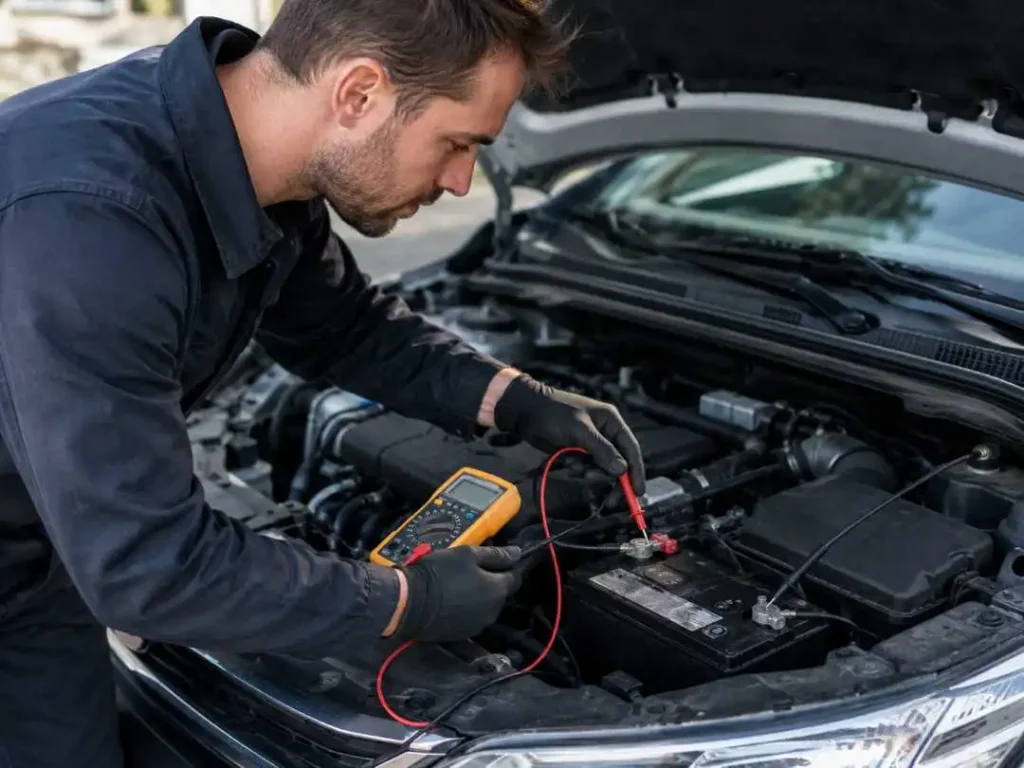
Once your car starts, do not turn it off immediately. Let it run and drive for at least 20 to 30 minutes to help recharge the battery. If possible, drive on open roads rather than sitting in traffic, as steady engine operation helps the charging system work better.
After the drive, try restarting the car. If it starts normally, the battery may have simply been drained. If it struggles again, the battery may be weak or there may be a charging system issue.
It is a good idea to have the battery tested at a mechanic, auto parts store, or service centre. A battery test can show whether the battery is healthy, weak, or ready for replacement.
When Should You Call a Professional?
Sometimes jump starting is not the best option. If your battery is damaged, leaking, or producing a strong smell, do not attempt to fix it yourself. You should also call a professional if you are unsure about the terminals, cables, or correct connection points.
Modern vehicles can have complex electrical systems, and some models have specific jump-starting points under the bonnet rather than direct battery access. If your car manual gives special instructions, follow them carefully.
You should also get help if your car still will not start after a proper jump start. In that case, the problem may be more serious than a flat battery.
How to Prevent a Flat Battery in the Future
Preventing battery problems is easier than dealing with a dead car. Always turn off lights, chargers, and accessories before leaving the vehicle. If you do not drive often, take the car for a longer drive occasionally to help keep the battery charged.
Keep battery terminals clean and secure. Corrosion around the terminals can reduce power flow and make starting difficult. During regular servicing, ask your mechanic to test the battery and charging system.
If your battery is old, replacing it before it fails can save you from unexpected breakdowns. This is especially important before winter, long trips, or busy work periods when you rely on your vehicle daily.
Final Thoughts
Knowing how to jump start a car is a practical skill that can help you handle a flat battery with confidence. The most important things to remember are to use the correct cable order, follow safety rules, and avoid rushing the process.
A jump start can get your vehicle running again, but it should not be ignored afterward. If your battery keeps going flat, have it tested as soon as possible. A healthy battery and charging system are essential for reliable driving.
By understanding how to jump start a car safely, you can be better prepared for unexpected battery trouble and avoid being stranded when you need your vehicle most.