How to Jump-Start a Motorcycle Safely When the Battery Is Flat
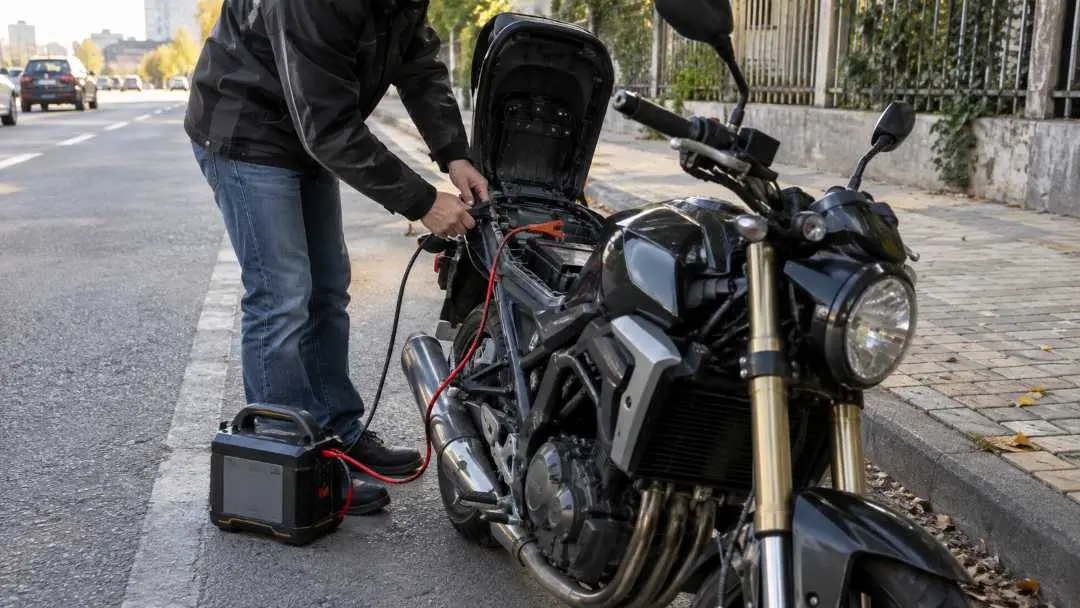
A motorcycle battery can lose enough charge to power the dashboard but still fail to turn the engine over. Knowing how to jump-start a motorcycle can help when the battery is simply discharged, but the process should be done carefully to avoid electrical damage or unsafe roadside work.
Before connecting anything, check the motorcycle owner’s manual because battery location, voltage and manufacturer instructions can vary between models. If the bike is stranded somewhere unsafe or the fault is unclear, AH Towing Services can help arrange suitable support rather than leaving you to troubleshoot beside moving traffic.
Check the Battery Before You Try a Jump Start
A motorcycle that will not start does not always have a flat battery. Loose terminals, a failed starter, damaged wiring, fuel problems or another electrical fault can create similar symptoms.
Take a few moments to check what happens when you switch the ignition on and press the starter. This can help you decide whether jump-starting is worth attempting.
Signs the Battery May Be Low
A weak battery may still power the lights and dashboard but struggle when the starter motor demands more current. You may hear clicking, notice slow cranking or see the lights dim sharply when you press the starter button.
Common signs include:
- Slow starter-motor operation
- Clicking when the starter is pressed
- Dashboard or headlight dimming
- The motorcycle starting after external battery assistance
- A battery that repeatedly loses charge
If the problem keeps returning, the battery or charging system may need testing. A jump start should not become a routine substitute for finding the underlying fault.
When You Should Not Jump the Battery
Do not try to jump-start a battery that is cracked, leaking, swollen or badly corroded. A visibly damaged battery can present safety risks and should be inspected or replaced instead.
Also stop if you notice a strong unusual smell, melted terminals or damaged wiring around the battery area. Connecting external power to a damaged electrical system can make the problem worse.
What Do You Need to Jump-Start a Motorcycle?
The equipment depends on whether you are using another battery or a portable jump starter. The important point is that the power source must be compatible with the motorcycle’s electrical system.
Most modern motorcycles use 12-volt systems, but you should still confirm the specification before connecting anything. Older motorcycles and some specialised battery setups may require different procedures.
Jumper Cables and Another Battery
Motorcycle jumper leads are usually easier to handle than large automotive cables because motorcycle battery terminals can be small and difficult to reach. The assisting battery should match the motorcycle’s required voltage.
Both vehicles should normally be switched off while the cables are being connected. Keep the clamps separated so they cannot touch each other and create a short circuit.
Portable Motorcycle Jump Starter
A portable jump pack can be useful because you do not need another vehicle nearby. Choose a unit that specifically states it is suitable for the motorcycle’s voltage and battery chemistry.
This matters particularly with lithium motorcycle batteries. Some common jump packs are intended only for lead-acid batteries, so always check both the battery and booster instructions.
How to Jump-Start a Motorcycle Battery Step by Step
If the battery appears physically sound and the motorcycle manufacturer allows jump-starting, park the bike on stable ground. Put the transmission in neutral and switch off unnecessary electrical accessories before connecting the cables.
The steps below suit many conventional 12-volt motorcycles, but the manufacturer’s instructions should always take priority.
Connect the Cables in the Correct Order
Make sure both power sources are switched off before making the connections. Check the positive and negative markings carefully rather than relying only on cable colour.
A typical connection order is:
- Connect the red clamp to the motorcycle battery’s positive terminal.
- Connect the other red clamp to the assisting battery’s positive terminal.
- Connect the black clamp to the assisting battery’s negative terminal.
- Connect the final black clamp to the recommended motorcycle ground point or negative terminal.
Check that the clamps are secure and not touching surrounding metal incorrectly. Reversed polarity can damage electrical components, so do not proceed if you are uncertain about the terminals.
Start the Motorcycle
Once the cables are connected correctly, switch on the motorcycle and make a short starting attempt. Avoid holding the starter button continuously for a long period because this can place unnecessary strain on the starter system.
If the motorcycle starts, allow the engine to settle before disconnecting the cables. Remove them in the reverse order and keep the clamps separated while doing so.
If the motorcycle does not start after a few sensible attempts, stop rather than repeatedly boosting it. The problem may involve more than a discharged battery.
How Many Amps Do You Need to Jump-Start a Motorcycle?
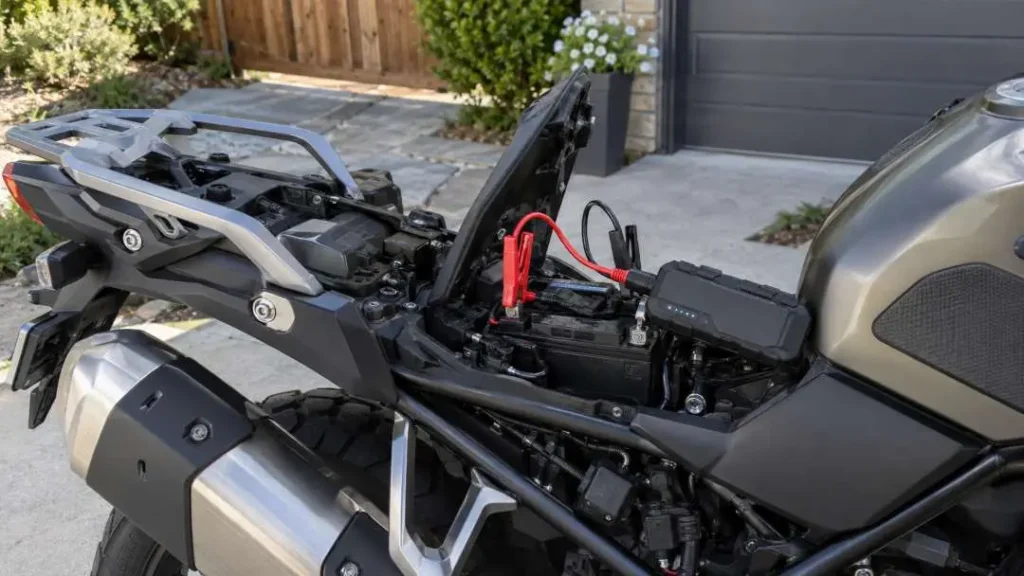
There is no single answer to how many amps to jump start a motorcycle because engine size, battery design and starting requirements differ between bikes. A small commuter motorcycle and a large touring bike may need very different starting current.
Battery cold-cranking amps and a jump pack’s advertised peak amps are also different measurements. You should not compare those numbers as though they represent exactly the same thing.
Motorcycle Battery CCA
Cold cranking amps, or CCA, indicate how much starting current a battery can supply under specified cold conditions. Different motorcycles use different battery specifications depending on engine size, compression and electrical design.
The motorcycle manual or battery specification should be used when choosing a replacement battery. Selecting a battery purely by physical size or price can result in the wrong starting performance.
Jump Starter Peak Amps
Portable jump starters often advertise much larger peak-current figures than the motorcycle battery’s CCA rating. This does not mean the booster automatically forces its full advertised current into the motorcycle.
The more important checks are:
- Correct voltage
- Suitable battery chemistry
- Compatibility with motorcycle engines
- Manufacturer approval
- Correct connection procedure
A larger number on the packaging is not automatically better. Compatibility matters more than simply choosing the highest amp rating.
| Starting option | What to check | Best use |
|---|---|---|
| Portable jump pack | Voltage and battery type | Roadside starting without another vehicle |
| Another motorcycle battery | Matching voltage | When another bike is available |
| 12V car battery | Correct voltage and motorcycle instructions | Temporary assistance with car engine off |
| Battery charger | Charging mode and battery chemistry | Flat battery at home |
| Professional assistance | Location and fault condition | Unsafe or uncertain roadside situation |
Can You Jump-Start a Motorcycle Without Cables?
People searching how to jump start a motorcycle without cables may be referring either to a portable jump pack or to bump-starting the bike. These are different methods and neither suits every motorcycle.
Modern bikes often depend on electronic fuel injection, immobilisers and other electrical systems. If the battery is completely discharged, the motorcycle may still lack enough electrical power to operate those systems.
Using a Portable Jump Pack
A portable booster removes the need for another vehicle, although it still uses short clamps to connect to the battery. This makes it convenient for riders who want to carry emergency starting equipment.
Keep the jump pack charged and stored according to the manufacturer’s instructions. A discharged booster will not provide useful assistance when the motorcycle battery fails.
Push-Starting a Motorcycle
Some manual motorcycles may be capable of bump-starting or push-starting, but you should confirm this in the owner’s manual first. The motorcycle generally still needs enough electrical power for its ignition and fuel systems.
Do not attempt this on a busy road, slippery surface or steep slope. If the manufacturer advises against push-starting, use another method.
What Should You Do After the Motorcycle Starts?
Getting the motorcycle running does not explain why the battery became flat. The bike may restart normally once and then fail again later if the underlying problem has not been corrected.
Pay attention to how the motorcycle behaves after starting. A battery that quickly becomes weak again may need proper charging, testing or replacement.
Watch for Another Starting Problem
After the motorcycle has been running, check whether the starter sounds normal when you next use it. Repeated slow cranking can indicate that the battery is no longer holding sufficient charge.
Possible causes include:
- An ageing battery
- Loose battery terminals
- Corrosion
- A charging-system fault
- Electrical drain while parked
- Long periods without use
- Repeated deep discharge
A workshop can test the battery and charging system more accurately than repeated roadside jump starts.
Know When the Bike Needs Transport
Jump-starting only helps when the starting problem is related to insufficient battery charge. It will not fix mechanical failure, damaged wiring, charging-system faults or a battery that is physically unsafe.
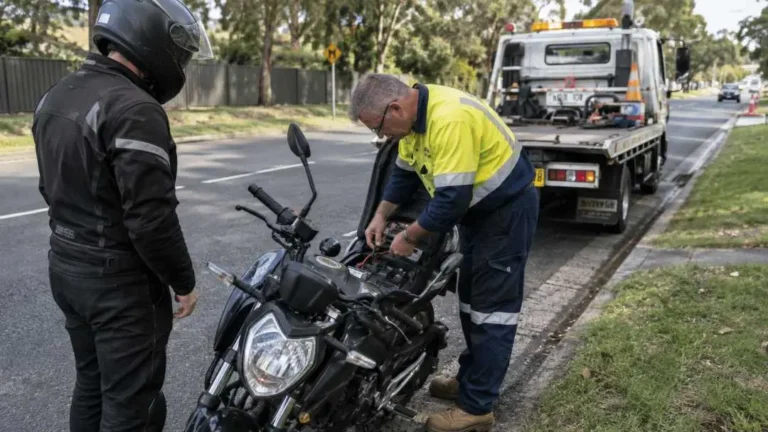
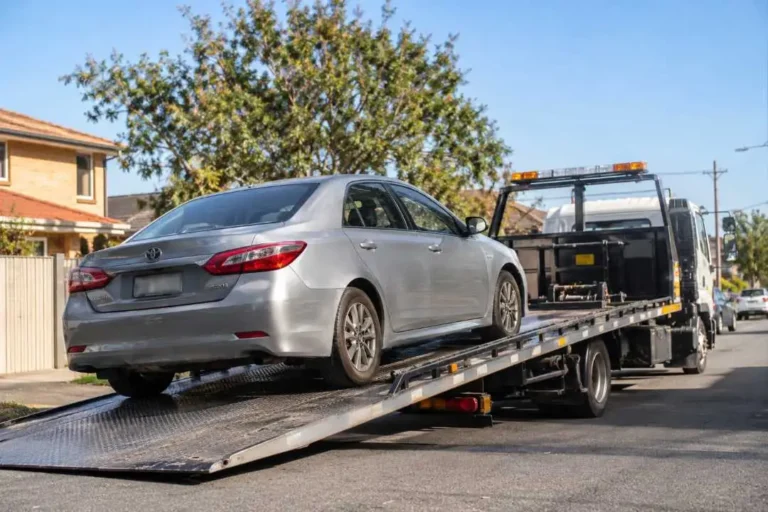
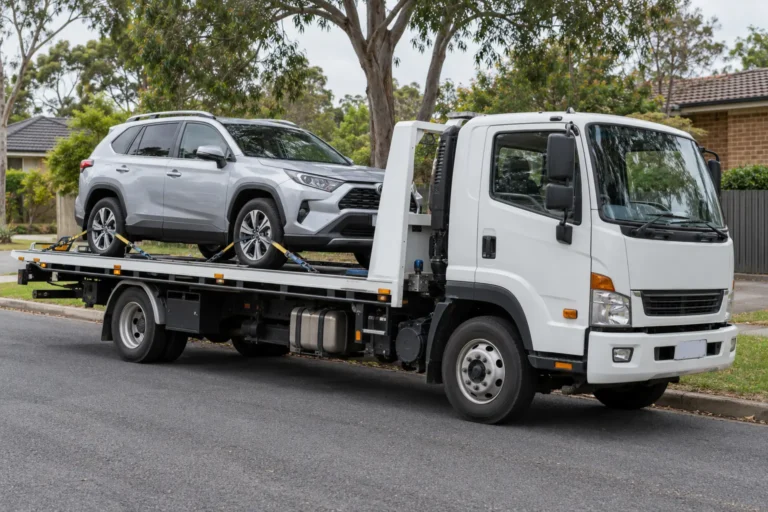
If the motorcycle starts but cannot be ridden safely, motorcycle towing can move it to a workshop or another suitable destination. This can be safer than repeatedly attempting repairs beside the road.
When Is Jump-Starting Not the Right Solution?
A jump start is useful for a healthy battery that has simply lost charge, but it should not be used for every starting problem. Continuing to boost a motorcycle with another fault can waste time and potentially make diagnosis more difficult.
If the bike repeatedly fails after receiving external power, treat that as a sign that further inspection is needed. Transporting the motorcycle may be more appropriate than trying another jump.
Mechanical Problems
The battery may be fine if the engine does not turn because of a mechanical fault. Unusual knocking, grinding or resistance when attempting to start the motorcycle should not be ignored.
Stop attempting to start the bike if you suspect mechanical damage. Further cranking may place additional stress on damaged components.
Electrical Problems
Loose connections, damaged cables, blown fuses and charging faults can all prevent normal starting. A jump pack cannot repair these problems.
If you cannot identify the issue safely, professional assistance can help prevent unnecessary electrical work at the roadside.
How to Reduce Future Motorcycle Battery Problems
Motorcycles often spend longer periods parked than cars, which can allow batteries to lose charge gradually. Regular checks can help identify a weak battery before it leaves you stranded.
Battery care is especially important for bikes used occasionally or stored for several weeks at a time. The correct maintenance method depends on the battery type.
Keep the Battery Charged
If the motorcycle will not be used for an extended period, consider using a compatible battery maintainer. Make sure the charging equipment is designed for your battery chemistry.
Do not use a lithium charging mode on a lead-acid battery or assume every charger automatically detects the correct battery type. Follow the battery and charger manufacturer’s instructions.
Check the Terminals
Loose or corroded battery terminals can increase resistance and contribute to difficult starting even when the battery still has some charge. Check the connections periodically, keep them secure and look for corrosion around the terminals as part of normal motorcycle battery maintenance.
Regular battery care can also help reduce repeat starting problems. GS Yuasa’s guidance on motorcycle battery care and maintenance recommends monitoring battery condition, maintaining charge during periods of inactivity and checking terminals for corrosion.
If the battery continues going flat despite proper maintenance, have the battery and charging system tested rather than relying on repeated jump starts. A battery that no longer holds charge reliably may need replacement before it leaves you stranded again.
When Roadside Help Makes More Sense
A motorcycle battery problem can be simple at home but much more difficult on a busy road or in an unfamiliar location. Your own safety should come before trying to diagnose the electrical system.
If the motorcycle is in a dangerous position, move yourself away from traffic where possible and arrange assistance. Roadside assistance can be useful when you do not have suitable jump-start equipment or are uncertain about the battery condition.
If the motorcycle cannot be restored to safe riding condition, towing may then be required. The aim should be to resolve the problem without creating another roadside risk.