Can You Tow an Automatic Car? What Drivers Need to Know
If your vehicle has stopped working, one of the first questions you may ask is can you tow an automatic car without damaging its transmission? In many situations, an automatic vehicle can be recovered safely, but the correct method depends on the vehicle’s transmission, drivetrain, condition and manufacturer instructions. When you need help, a professional towing service can assess the vehicle and choose equipment suited to the recovery.
Automatic cars should not all be towed in the same way. A method that is suitable for one vehicle may be unsuitable for another, particularly when the driven wheels remain on the road.
Can You Tow an Automatic Car Safely?
Yes, an automatic car can be towed, but the recovery method needs to match the vehicle. The transmission and drivetrain can be affected if the vehicle is moved in a way that the manufacturer does not permit.
The safest approach is to determine how the vehicle is designed to be transported before it is moved. This is particularly important when the engine will not run, because normal transmission lubrication and other systems may not operate in the same way.
Why Automatic Transmissions Need Care
Automatic transmissions contain multiple moving components that normally operate while the engine is running. During ordinary driving, the transmission works within a specific lubrication and cooling system designed around the vehicle’s operating conditions.
When the vehicle is pulled with the engine off, those conditions can be different. This is why drivers should not assume that an automatic car can simply be placed in neutral and towed behind another vehicle.
Does Neutral Make Towing Safe?
Selecting neutral may allow the wheels to rotate freely, but it does not automatically make every towing method appropriate. Some vehicles have specific procedures for being moved in neutral, while others require the driven wheels to be lifted or the entire vehicle to be transported on a flatbed.
Always check the owner’s manual for your exact vehicle before deciding how it should be towed.
Can You Tow a Car With an Automatic Transmission?
If you are asking can you tow a car with an automatic transmission, the answer depends on the individual vehicle rather than the transmission type alone.
Before recovery, several details should be considered:
- Vehicle make and model
- Model year
- Front-, rear- or all-wheel drive
- Transmission design
- Whether the engine starts
- Whether the vehicle can select neutral
- Whether the parking brake can be released
- Condition of the wheels and tyres
- Manufacturer towing instructions
Providing these details to the towing operator helps them understand what equipment may be suitable.
Front-Wheel-Drive Automatic Vehicles
In a front-wheel-drive vehicle, the front wheels are connected to the drivetrain. If those wheels remain on the road during an unsuitable towing procedure, the transmission and related components may be subjected to movement they were not designed to handle in that situation.
Depending on the vehicle, lifting the driven wheels or transporting the entire car may be more appropriate.
Rear-Wheel-Drive Automatic Vehicles
Rear-wheel-drive cars have their driven wheels at the rear, which changes how the vehicle should be recovered. However, rear-wheel drive does not automatically mean that a particular towing method is safe.
The vehicle’s manufacturer instructions and actual condition should still determine the recovery approach.
All-Wheel-Drive Automatic Vehicles
All-wheel-drive vehicles can require additional attention because several wheels may be connected through the drivetrain. Some models have specific towing modes, while others require all four wheels to be lifted from the road.
If you are unsure about an AWD vehicle, avoid experimenting with different towing methods.
Can You Flat Tow an Automatic Car?
The question can you flat tow an automatic car depends on whether the specific vehicle has been approved for four-wheel-down towing.
Flat towing means all four wheels remain on the road while another vehicle pulls the car. Although certain vehicles are designed for this method, others can experience drivetrain problems if they are moved this way.
When Flat Towing May Be Suitable
If the owner’s manual specifically permits four-wheel-down towing, it may provide a particular procedure that must be followed. This could include selecting a specified transmission position, activating a towing mode or following other preparation steps.
These instructions should be followed exactly rather than relying on general advice about automatic transmissions.
When Flat Towing Should Be Avoided
Do not assume that a vehicle can be flat towed simply because it has a neutral position. If the manufacturer’s instructions prohibit the method or do not approve it, another recovery option should be considered.
This is especially important when the vehicle has an unusual drivetrain, electronic controls or a transmission that requires specific operating conditions.
Can You Tow an Automatic Car a Short Distance?
Many drivers wonder, can you tow an automatic car a short distance if they only need to move it around a driveway, parking area or nearby location.
A short distance does not automatically make an unsuitable towing method safe. The wheels can still rotate and cause movement through drivetrain components even when the vehicle is only being moved a limited distance.
If the car needs to be moved a short distance, a towing professional can determine whether it can be safely rolled, lifted or loaded onto suitable equipment.
Can You Tow an Automatic Car in Neutral?
The question can you tow an automatic car in neutral depends on the vehicle and the towing procedure specified by its manufacturer.
Neutral can be part of an approved recovery process for some vehicles. However, other cars may require the driven wheels to be lifted or the entire vehicle to be transported with all wheels off the road.
What If Neutral Cannot Be Selected?
A flat battery, electrical fault or transmission problem may prevent the vehicle from entering neutral normally. This can be particularly difficult with modern cars that use electronic gear selectors.
Do not force the gear selector or attempt to drag the vehicle while its wheels are locked. Explain the problem to the towing operator so they can select an appropriate recovery method.
Which Towing Method Is Suitable for an Automatic Car?
There is no single towing method that is suitable for every automatic vehicle. The right option depends on the car’s drivetrain, condition, manufacturer requirements and the circumstances surrounding the breakdown.
| Towing method | Possible application | Key consideration |
|---|---|---|
| Flatbed | Full vehicle transport | Keeps all wheels off the road |
| Wheel lift | Selected recovery situations | Driven wheels must be considered |
| Flat towing | Approved vehicles only | Manufacturer approval is essential |
| Specialised recovery | Damaged or immobile vehicles | Equipment depends on condition |
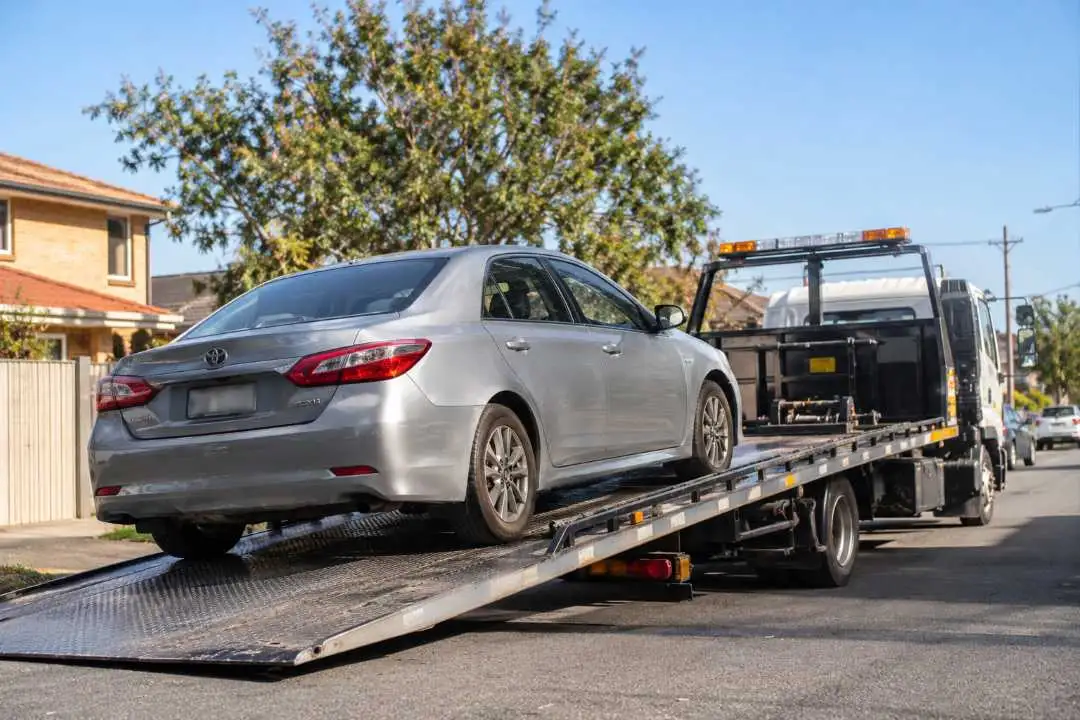
For vehicles that should not be moved with their wheels rotating on the road, towing service can provide a practical transport option by allowing the vehicle to be loaded onto the tray.
What If the Automatic Car Has a Flat Battery?
A flat battery can create an additional complication in an automatic vehicle. Modern cars may use electrical power for the gear selector and electronic parking brake, meaning a completely discharged battery can prevent normal preparation for towing.
If the vehicle simply needs electrical assistance, roadside assistance may be able to help restore power and determine whether another fault is present. If the vehicle still cannot be driven safely, professional towing may be necessary.
Why You Should Not Force the Controls
Trying to force an electronic gear selector or parking brake can create further problems. If the vehicle has no electrical power, there may be a manufacturer-specific manual release procedure.
Tell the operator about the flat battery before recovery so the situation can be assessed correctly.
What If the Automatic Car Has Accident Damage?
Accident damage can significantly change the way an automatic car needs to be recovered. Even when the engine starts, damage to the wheels, suspension, steering or underbody can make driving the vehicle unsafe.
Explain the visible damage when arranging assistance. This gives the towing operator a better understanding of the vehicle’s condition before arriving.
Damaged Wheels and Suspension
A damaged wheel may not rotate normally, while suspension damage can change the vehicle’s position or stability. Pulling a vehicle with these problems can make recovery more difficult.
Specialised equipment may be needed to position and secure the vehicle without placing unnecessary pressure on damaged components.
Locked Wheels
Locked wheels can prevent a vehicle from being moved normally. In this situation, the operator may need additional recovery equipment instead of simply pulling the vehicle.
Providing this information when booking can help ensure the appropriate equipment is available.
Common Mistakes When Towing an Automatic Car
Drivers can make incorrect assumptions when they are dealing with an unexpected breakdown. Automatic vehicles differ in their transmission systems and drivetrain configurations, so a towing method that works for one vehicle may not work for another.
Avoid these common mistakes:
- Assuming neutral makes every automatic safe to tow
- Flat towing without checking the owner’s manual
- Ignoring whether the vehicle is AWD
- Dragging locked wheels
- Forcing an electronic gear selector
- Using unsuitable towing equipment
- Continuing to tow when unusual resistance occurs
When there is uncertainty, professional recovery can help reduce the risk of using an unsuitable method.
How to Prepare an Automatic Car for Towing

A few simple preparations can make the recovery process easier. More importantly, accurate information allows the towing operator to understand what they are dealing with before attempting to move the vehicle.
Before assistance arrives, provide:
- Exact vehicle make and model
- Pickup location
- Vehicle condition
- Whether the engine starts
- Whether neutral can be selected
- Whether the parking brake is released
- Any wheel or suspension damage
- Access restrictions
Remove valuable belongings and keep the vehicle keys available where possible. If the vehicle is located in an underground garage, narrow driveway or restricted parking area, mention this when arranging the tow.
When Should You Avoid Towing an Automatic Car Yourself?
Improvised towing can be risky when you do not know the vehicle’s specific requirements. A rope, strap or another vehicle may not provide the correct equipment or control needed to recover a disabled automatic car safely.
Professional towing is particularly useful when:
- The car cannot select neutral
- The battery is completely flat
- The wheels are locked
- The vehicle has accident damage
- The car has all-wheel drive
- You cannot confirm the manufacturer’s towing instructions
- The vehicle is in a difficult location
Using suitable recovery equipment can help reduce unnecessary stress on the transmission, drivetrain, wheels and other components.
Check Your Vehicle’s Towing Requirements
Before an automatic vehicle is moved, it is important to consider its condition, drivetrain and the equipment being used for recovery. The vehicle should be secured appropriately for transport, particularly when it is being loaded onto a recovery vehicle rather than driven away.
Correct restraint is also an important part of vehicle transport because an unsecured load can create risks for the vehicle and other road users. The National Transport Commission’s load restraint guidance explains the importance of properly securing loads during transport and provides relevant safety principles for light vehicles.