Towing Laws in Australia: What Drivers Need to Know
Towing laws in Australia vary by state or territory and by the circumstances of the tow. When arranging professional towing after a breakdown, check who is collecting your vehicle, where it will go, how charges are calculated and whether storage is involved. A rule applying to one towing category or location may not apply to another.
This guide focuses on breakdown towing for cars. Rules for towing your own trailer or caravan, private-property removals and police impoundment involve different considerations.
The article provides general information; check current requirements for your jurisdiction and towing situation before relying on a particular rule.
Which Australian Towing Regulations Apply to Your Situation?
The starting point is identifying what service you need. A car collected from your driveway because it will not start can involve a different process from a vehicle removed under an authority’s direction.
Before booking, establish:
- Location: Which state or territory is the vehicle in?
- Reason: Is this a mechanical breakdown or planned vehicle transport?
- Who is arranging it: You, an insurer, a roadside assistance provider or an authority?
- Destination: Will the vehicle go directly to a mechanic, your home or a storage yard?
These details help you ask the right questions about authorisation, pricing and collection.
For example, Queensland’s transport authority expressly states that its tow truck scheme does not regulate breakdown or trade towing. Its scheme requirements should therefore not be treated as the standard terms for every breakdown booking.
How Towing Rules Differ Across States and Territories
There is no single national towing tariff or authorisation process covering every situation. The table below identifies useful checks and official starting points. Consumer guidance is identified separately where it does not establish a dedicated towing requirement.
| State or territory | Key point to check | Official guidance |
|---|---|---|
| New South Wales | Category B operator licensing covers breakdown and trade towing, subject to applicable exemptions. | NSW operator licensing |
| Victoria | Trade towing is deregulated, but road safety, consumer protection and workplace safety laws still apply. | Transport Victoria: trade towing |
| Queensland | The state tow truck scheme excludes breakdown and trade towing. Confirm the booking terms rather than assuming scheme prices apply. | Queensland tow truck scheme |
| Western Australia | General consumer rules allow customers to request an itemised service bill. This source concerns billing, rather than a breakdown towing tariff. | WA receipts and itemised bills |
| South Australia | Consumer and Business Services offers advice and may provide conciliation for suitable service disputes after reasonable attempts to resolve them. | CBS advice and conciliation |
| Tasmania | Consumer Affairs Tasmania recommends contacting the service provider, then making a written complaint before seeking further help. | Tasmanian complaint process |
| Australian Capital Territory | Access Canberra provides consumer assistance within its eligibility criteria and expects customers to contact the business first. | Access Canberra consumer assistance |
| Northern Territory | NT Consumer Affairs is a starting point for consumer rights, contracts and service disputes. Its general guidance is not a towing fee schedule. | NT Consumer Affairs |
These distinctions come from the relevant government authorities. The absence of a dedicated breakdown towing rule in this table does not mean other laws cease to apply.
What to Check Before Authorising a Tow
For a driver-arranged breakdown tow, make the booking clear before collection. The following checklist is practical advice; it is not a claim that every item must appear on a nationally prescribed form.
Ask the operator to confirm:
- Its business name and any applicable licence or accreditation.
- Who is authorised to approve collection.
- The pickup address and exact delivery destination.
- What the towing agreement includes.
- The quoted total or method used to calculate the price.
- Any additional access, recovery, waiting or after-hours charges.
- Whether storage is expected and how it will be charged.
- How you will receive the booking confirmation and invoice.
Describe the vehicle accurately. Mention its make, model, location and whether it can roll, steer and brake. Restricted access, underground parking or a vehicle stuck in gear may affect the equipment needed and the quotation.
Keep a written confirmation by email or text where possible. If the arrangement changes, ask for the revised destination or price to be recorded.
In NSW, official guidance identifies a breakdown towing record for Category B work. This should not be interpreted as a universal requirement for every customer to sign the same towing authorisation document.
Treat towing, storage and repairs as separate decisions when reviewing paperwork. Check whether a document authorises only transport or also includes other services before agreeing.
Towing Fees, Storage Charges and Invoices
Towing fees and charges depend on the applicable rules and the service being arranged. Do not assume a published government maximum applies to an ordinary breakdown booking. Queensland, for example, expressly excludes breakdown and trade towing from its tow truck scheme.
Ask whether the price includes travel to the vehicle, loading, the agreed transport distance and unloading. Confirm whether GST, tolls or other identified charges are included.
If the operator provides an estimate, ask what could change it. For example, additional equipment might be needed if the vehicle’s condition differs from the information supplied.
Where practical, ask the operator to contact you before undertaking additional chargeable work.
Clarify storage arrangements
If the vehicle cannot go directly to its destination, ask:
- Where will it be stored?
- When do storage charges start?
- Are charges calculated by calendar day or another period?
- What are the collection hours?
- What identification or authority is needed for collection?
- Will another tow be required?
Do not assume every breakdown booking includes free storage. Obtain the applicable arrangements for your particular service.
Keep an itemised invoice
An invoice helps you compare the completed work with the booking. Under the ACCC’s service billing guidance, consumers can request an itemised bill, which the business must provide within seven days. The ACCC advises requesting it within 30 days of receiving the original bill.
If an insurer or roadside provider is involved, check approval requirements, distance limits and any storage conditions. Arranging a tow does not establish that someone else will reimburse it.
Can You Choose the Towing Company and Destination?
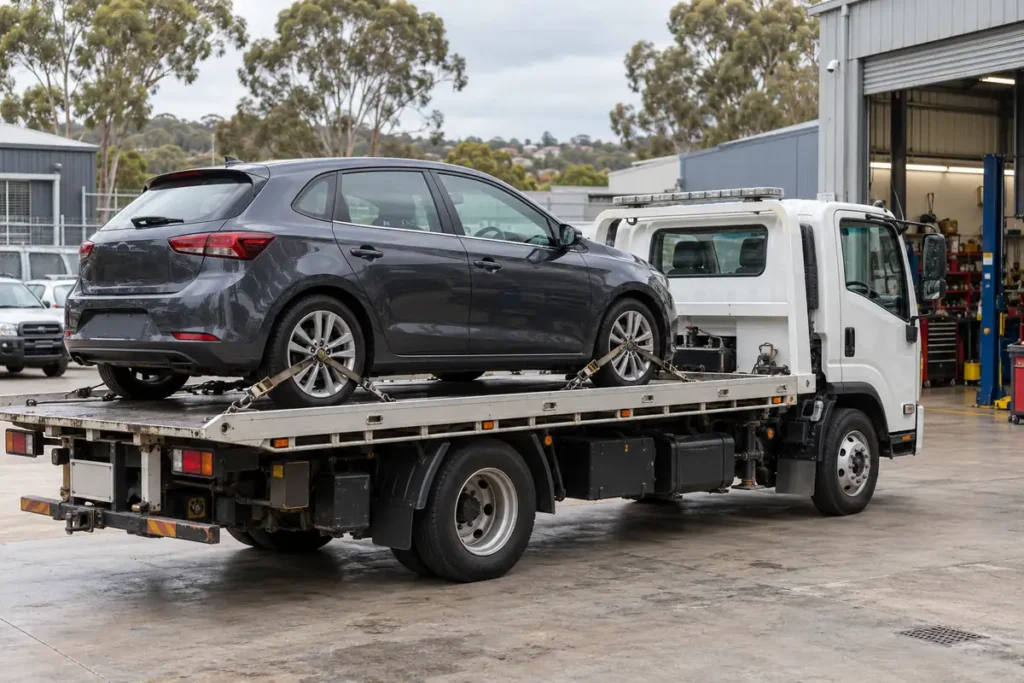
For a breakdown you are arranging yourself, contact a suitable provider and agree on a destination before booking. Ask whether it can accommodate the vehicle and deliver it at the required time.
A workshop may be closed or unable to accept the vehicle. Confirm its arrangements for unattended deliveries, keys and parking before sending the car there.
If an insurer or roadside assistance provider organises the tow, ask which providers and destinations your cover allows. Choosing a different arrangement may affect what it agrees to pay.
Authority-directed removals need separate consideration. NSW guidance, for example, identifies clearways and designated tow-away locations where vehicles can be removed through a process different from a private breakdown booking.
If police or another authority is directing a removal, ask which process applies and where the vehicle is going. Do not obstruct a lawful removal or delay urgent assistance while discussing a preferred destination.
Towing Laws in NSW: Practical Checks for Sydney Drivers
Sydney drivers should check NSW requirements rather than relying on rules from another state. The NSW licensing scheme includes breakdown and trade towing, with exemptions for specified vehicles and circumstances.
NSW Government guidance states that tow truck businesses require an operator licence and nominated drivers must hold current Tow Truck Drivers Certificates. Category B covers breakdown and trade work.
As a practical credential check, ask for the operator’s licence details. NSW requires the licensee name and number to be displayed on the driver’s side of the truck. If you need help checking their status, contact NSW Fair Trading through its official licensing guidance.
For a breakdown booking, confirm the quoted charges rather than assuming a government fee table applies. Ask what booking record or agreement covers your tow and retain a copy.
When arranging car towing in Sydney, supply the vehicle’s condition and access details so the provider can assess suitability.
If a dispute remains unresolved, NSW Fair Trading’s vehicle towing consumer guidance explains how to submit a complaint and supporting correspondence.
What to Do if You Dispute a Tow or Its Charges
A clear record makes a complaint easier to assess. Focus on what was agreed, what happened and the outcome you are requesting.
- Keep the documents. Save the booking, quote, authorisation, invoice and correspondence.
- Record the details. Note pickup and delivery locations, dates, times and the people involved.
- Request an explanation. Identify the charges you do not understand and ask for an itemised breakdown.
- Write to the operator. Explain the problem clearly and state the resolution you are seeking.
- Use the appropriate complaint channel. Contact the relevant consumer agency or regulator, and involve your insurer or roadside provider where appropriate.
This approach follows official consumer complaint guidance, including Tasmania’s recommendation to contact the business, write to it and retain evidence before seeking further assistance.
Do not assume a complaint automatically stops storage charges. Ask about collection arrangements while seeking advice, and obtain specific guidance before withholding payment or attempting to force vehicle release.
Towing Laws in Australia – FAQs
The answers below address common breakdown towing questions. The location, service category and booking arrangements remain important.
Before arranging transport, understand the destination, charges and any storage arrangements. For towing services across Sydney or roadside assistance, call AH Towing Services on 0420 502 202 to discuss availability and vehicle suitability.